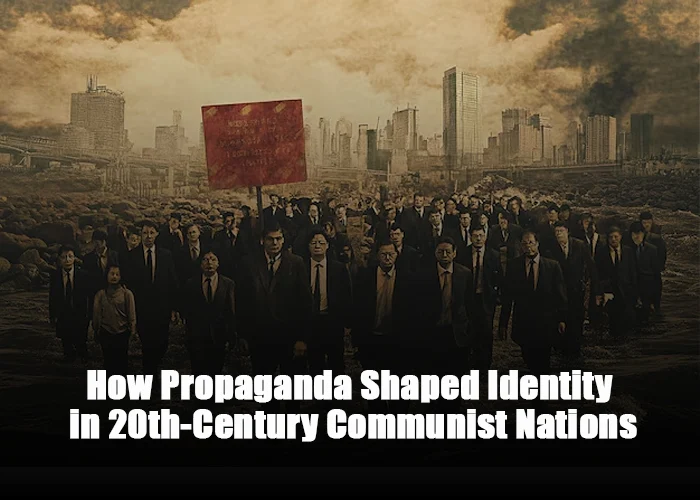
Imagine waking up in a city where every wall tells you the same story. You walk down the street. You see giant red posters. They show strong workers and smiling farmers. You turn on the radio. The songs praise one leader. You go to school. The books say your country is the only happy place on Earth.
This wasn’t just advertising. It was a complete rewrite of reality. This was the daily life for millions of people. It is the core of communist propaganda history. It didn’t just change politics. It changed how people saw themselves. It changed how they saw their neighbors. You might wonder how it worked. It was systematic. It was everywhere. It defined who you were.
What did the streets look like?
Think about your daily commute. You see ads for coffee. You see billboards for cars. Now replace those with political banners. They are everywhere. They are massive. This visual style is famous in communist propaganda history.
The goal was simple. The state wanted to look perfect. They wanted the individual to look like a small gear in a big machine. You weren’t just a person. You were a builder of a new world. That is a powerful feeling. It gave people purpose. But it also took away their choice. You had to be the person in the poster. You had to be strong. You had to be happy. Even if you were hungry. Even if you were tired. The poster said you were happy. So you acted happy.
How did they reach the children?
Adults can be stubborn. You can’t always change their minds. But kids are like sponges. The regimes knew this. They started early. Schools didn’t just teach math. They taught loyalty. You learned to love the party before you learned to read. This strategy is a dark chapter in communist propaganda history.
Think of the Young Pioneers. It looked a bit like the Boy Scouts. But the promise wasn’t to be helpful to others. It was to be loyal to the state. Kids wore red scarves. They marched in parades. They felt special. They belonged to something huge. This shaped their identity from day one. They grew up believing the state was their true family. Sometimes they trusted the state more than their parents.
Who were the gods of this world?
You know the faces. Stalin. Mao. Castro. They weren’t just politicians. They were presented as saviors. You couldn’t escape their gaze. Their portraits hung in classrooms. They hung in factories. They hung in living rooms.
This hero worship is key to communist propaganda history. The leader was the father figure. He protected you from enemies. He guided the nation. Questioning him wasn’t just illegal. It felt like a sin. It messed with your head. You started to believe one man could fix everything. It made you feel small. It made him look giant. Your identity was tied to his success. If he was great, you were safe.
Why was the truth so hard to find?
Imagine having no internet. No foreign news. No diverse opinions. You only have one newspaper. It tells you the harvest was great. It tells you the West is failing. You have no way to check.
Control of information defined communist propaganda history. The state owned the truth. If they said the sky was green, you nodded. Maybe you didn’t believe it. But you acted like you did. This created a split identity. You had your public face. You had your private thoughts. You learned to hide your real self. It was a survival skill. Read more about the cold war. It was exhausting. You lived two lives at once.
Did art play a role in this?
Yes. It played a huge role. Artists couldn’t paint just anything. They had to follow the rules. This style was called Socialist Realism. It had to be positive. It had to be simple. It had to serve the party.
You won’t find sad paintings here. You find muscles and smiles. You find sunrises and tractors. This artistic period is a fascinating part of communist propaganda history. It tried to create a utopia on canvas. It ignored the hunger. It ignored the fear. It showed the world as the leaders wanted it to be. Not as it was. If you were an artist, you had a choice. Paint the lie or go to prison. Most painted the lie. This shaped the cultural identity of the nation. It erased struggle. It erased sadness.
How did this affect relationships?
Propaganda didn’t just look at the big picture. It looked at your neighbor. It told you to watch them. It told you to report them. Trust broke down. You couldn’t speak freely at dinner. Your uncle might report you. Your coworker might be a spy.
This paranoia is a sad legacy of communist propaganda history. It isolated people. It made the state the only safe place. You bonded with the party because you couldn’t bond with people. It destroyed communities to build a collective. It sounds like a contradiction. It was. But it worked for a long time. It made you suspicious. It made you careful. That became part of your personality.
Why does this matter today?
You might think this is old news. The Berlin Wall fell. The Soviet Union collapsed. But the methods remain. We still see attempts to control the narrative. We see leaders who want to be worshiped.
Understanding communist propaganda history protects you. It teaches you to spot the signs. It teaches you to value the truth. When you see a simple answer to a complex problem, be careful. When you see art that only glorifies power, look closer. The past has a habit of rhyming. We are still susceptible to these tricks. We still want to belong. We still want a hero.
What was the psychological cost?
We talk about politics. We talk about wars. But what about the mind? Living a lie takes a toll. You forget who you really are. You become an actor in your own life.
Scholars studying communist propaganda history often focus on this trauma. It is the trauma of double-think. You know the truth. You tell the lie. Eventually the line blurs. You stop fighting it. You accept the gray reality. This is the ultimate victory of propaganda. It doesn’t just change what you think. It changes how you think.
Summary
The 20th century was a laboratory. The experiment was on human nature. The tools were posters, radios, and fear. It shaped millions of lives. It created a unique identity born from communist propaganda history. It reminds us of the power of words. It reminds us of the value of freedom. Don’t take your voice for granted. It is the most precious thing you own.
Looking for your next great read? Get Szabo Antonio’s book today!